AgendaPro Fitness 2.0 — Designing on Top of a Hackathon
The Problem
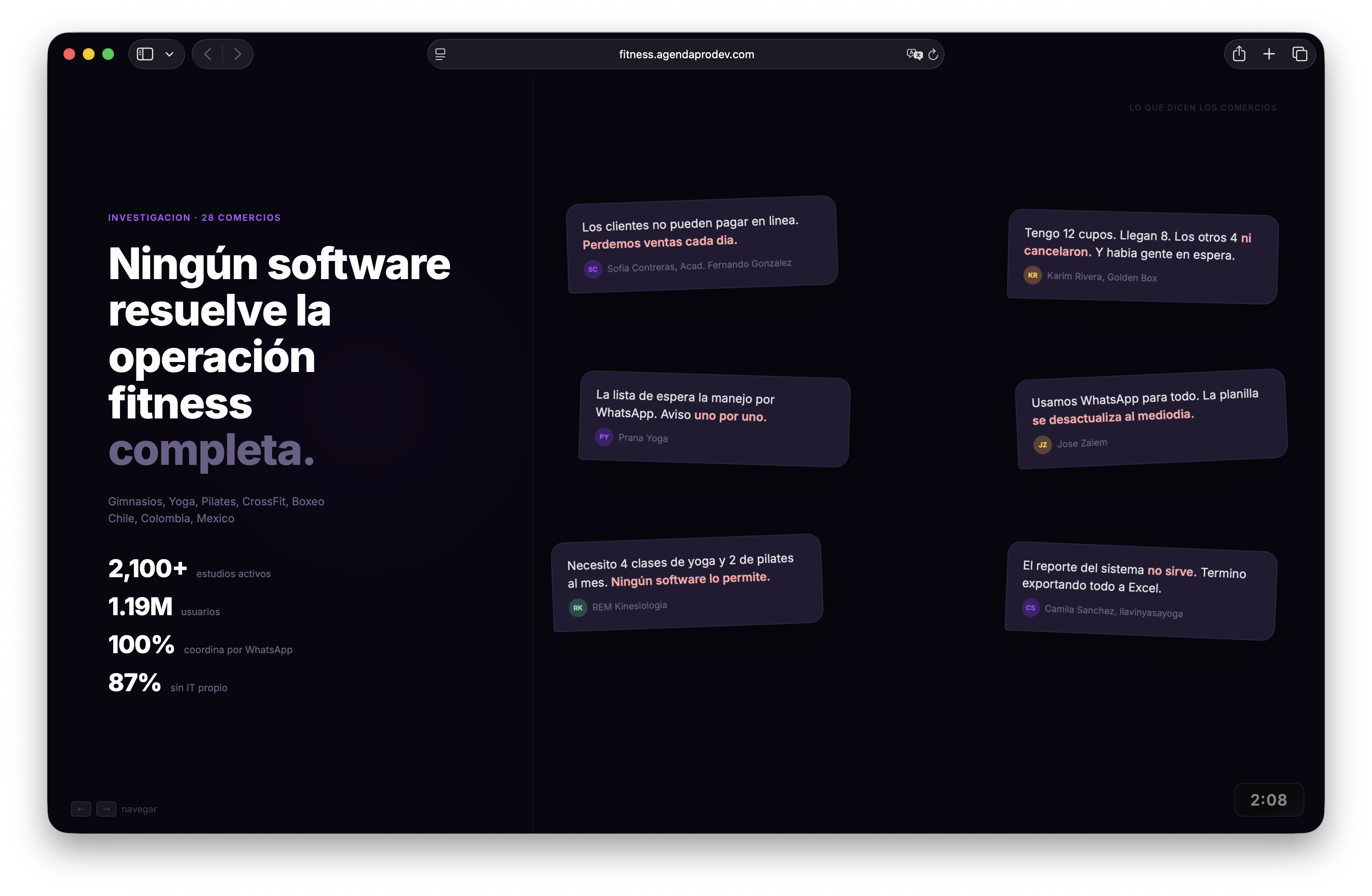
Fitness is a high-growth vertical in LATAM — 2,100+ gyms and studios in Chile alone, with 72% growth post-pandemic. AgendaPro was losing ground to competitors like BoxMagic because the existing plans & memberships module had severe technical debt: no configurable plan rules, no online payment for plans, fragile quota management.
The internal hackathon produced a working greenfield MVP — five microservices, dual-pool authentication, a clean plan rules engine. Our team adopted that codebase. The job: turn an unpolished prototype into a living product, with three people and no dedicated PM.
Inheriting the Hackathon
What we found: 5 microservices already running, dual-pool Cognito auth, the plan rules engine resolved (unlimited / global pack / per-type pack patterns). What was missing for daily use: clients had no visibility of their plans in mobile, full classes had no waitlist mechanism, and staff had no mobile tool to manage their day from the gym floor.
We chose to build mobile-first because that's where instructors and clients actually live. The web SaaS would stay as the configuration and reporting hub; mobile would carry the day-to-day.
Shape Up as Operating System
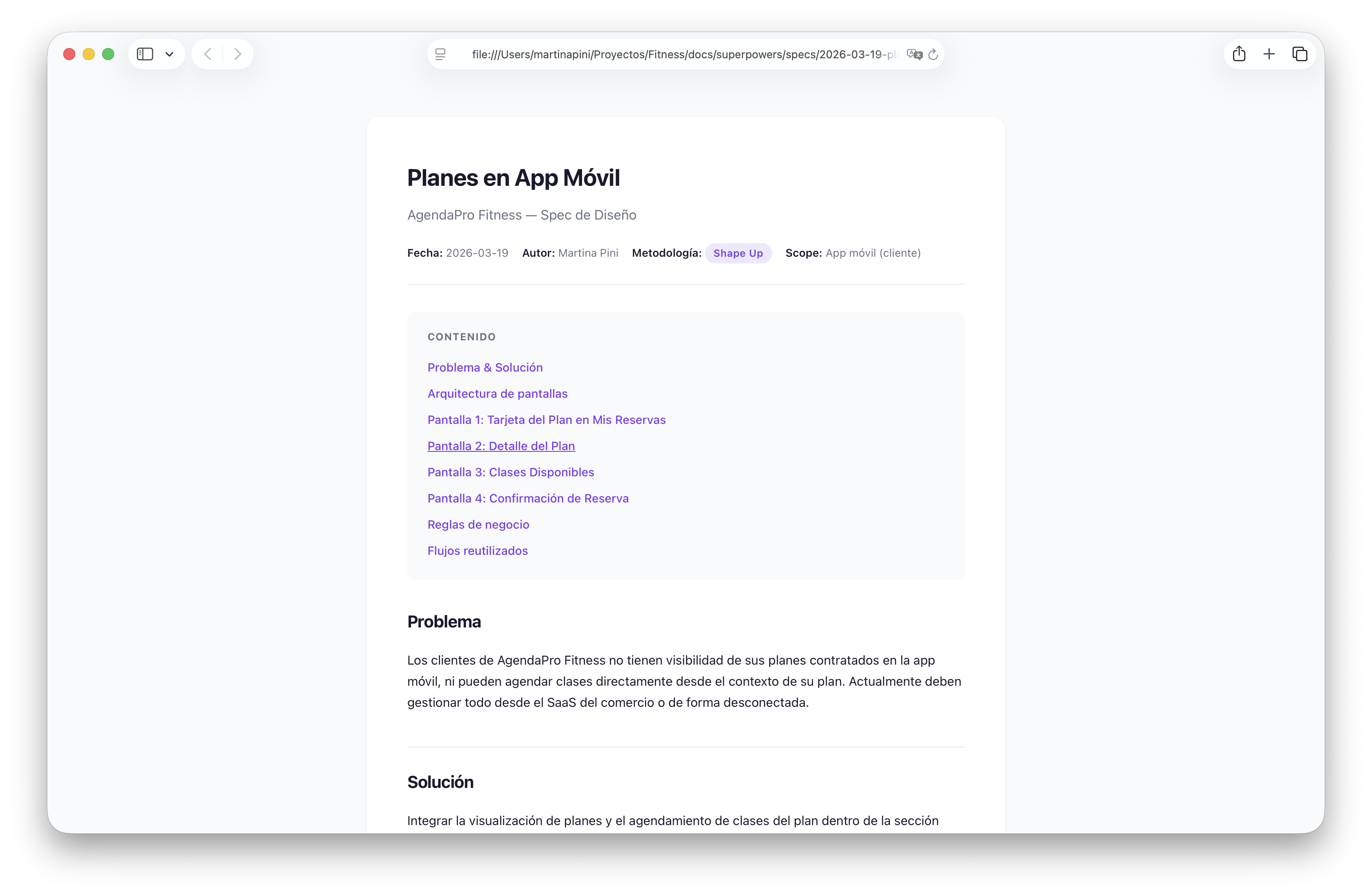
With three people and no dedicated PM, process discipline mattered more than tools. We adopted Shape Up: pitch + appetite + circuit breakers per feature. Every initiative passed through structured brainstorming, breadboarding, and several rounds of HTML prototypes before closing in Figma.
This rhythm let us deliver three end-to-end features in roughly three weeks with a small team — and gave the engineers a clear, scoped problem to pick up at handoff.
Spotlight: Designing the Waitlist with Evidence
The industry — ClassPass, Mindbody, Wellhub, BoxMagic — overwhelmingly uses auto-enroll: when a slot opens, the next person on the waitlist is automatically booked. It fills classes to ~95%, has a simple mental model, and lower operational overhead.
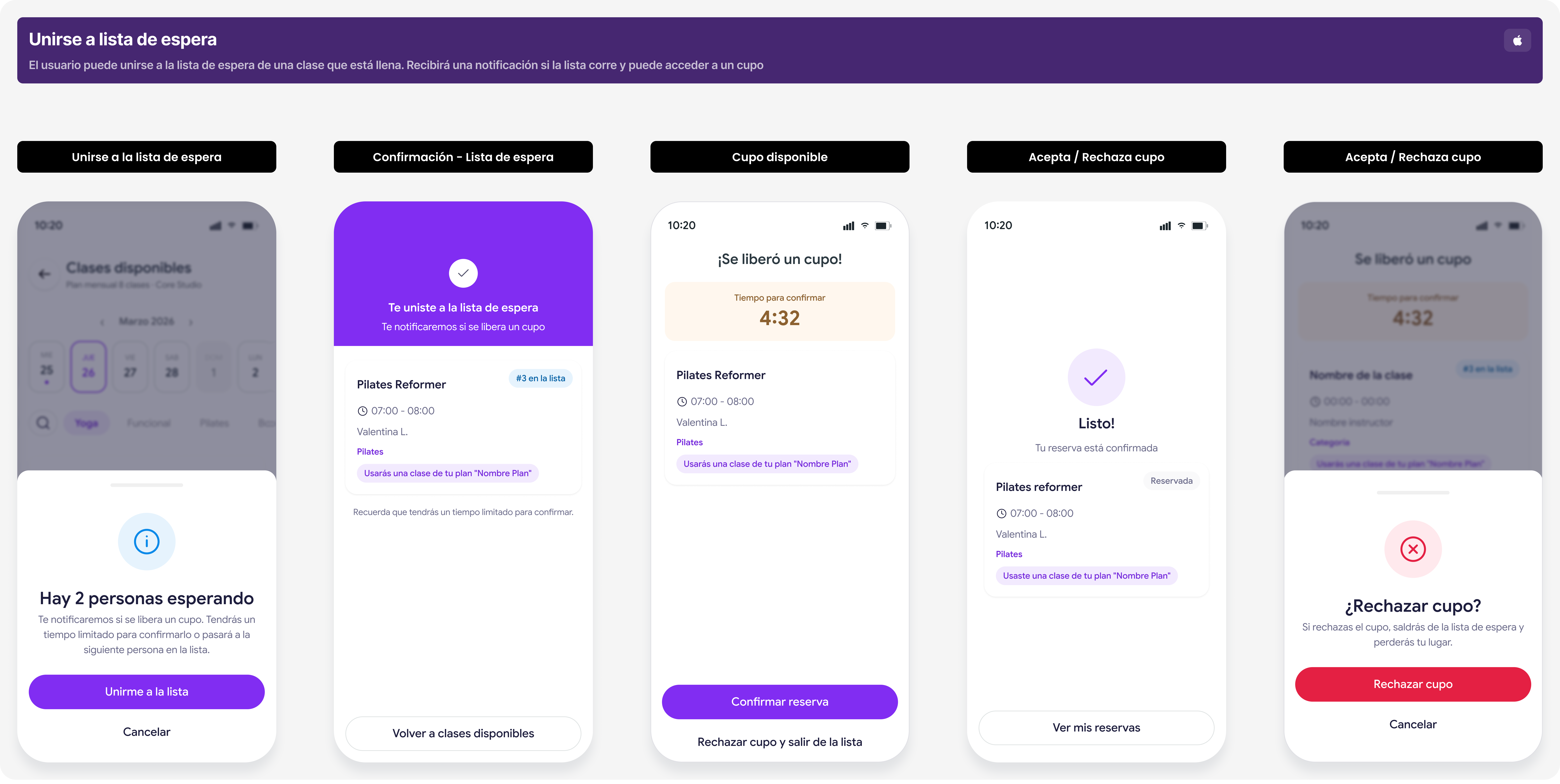
We chose the opposite: notify + confirm with cascade. The reasoning was contextual:
· Perceived control matters more in LATAM, where trust in automatic charges is lower. Active confirmation reduces emotional friction.
· Active confirmation reduces no-shows by filtering out people who can no longer attend.
· It fits the plan quota engine — you don't want to "spend" a class from a limited plan without meaning to.
· The fill-rate tradeoff is offset by a fast cascade (5 minutes per person in queue).
The decision was documented as a Shape Up pitch with explicit tradeoffs, so the team and stakeholders could challenge it on the merits — not on intuition.
Three Features, One Direction
· Multiple bookings — multi-select classes across different dates and times, all within the same plan, with a quota preview before confirming. If a class fills up along the way, joining its waitlist is offered inline.
· Waitlist — notify + confirm with cascade, position visible, free exit, push + email channels.
· Instructor-first staff app — a new mobile app built first for the people running the floor: schedule, attendees, check-in, walk-ins — also used by admins and owners.
Three different surfaces, one consistent direction: shrink the distance between the user's intent and the action they need to take.
The Impact — Designing with Claude Code
Three weeks of design output, with AI as a constant copilot:
· 3 features designed end-to-end (Plans in mobile, Waitlist, Staff Fitness app)
· 2 Shape Up specs delivered + 1 implementation plan handed off to dev
· 10 structured brainstorming sessions
· ~18 iterative HTML prototypes explored before closing the final design
· 1 brand-new mobile app conceptualized from scratch (Staff Fitness, iOS + Android)
· 5 iterations on the Plans section before reaching the final version
· 7 prototypes spent only on solving the Waitlist flow (waiting state, slot options, rejection overlay)
An iteration pace that previously would have required a team twice the size — sustained by a single PD/PM with AI as a design copilot.